
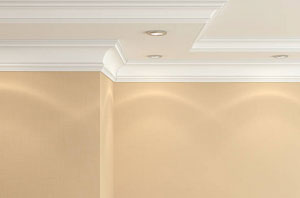
Hale Barns Coving Installation (WA15): The use of ornate mouldings and coving to soften the sharp lines between ceilings and walls is the traditional way to solve this issue. Styles change over the years and the use of coving in interior design is a good example, one year it is in, the next it's out, yet homes in Hale Barns continue to be embellished with this useful feature. Personal preference rather than fashion, should however dictate your choice of whether or not to have coving fitted in your property. You will simply have to choose whether you want sharp, contemporary lines or rounded, classic transitions.

What is Coving? - Coving is an architectural element, meaning a concave, curved material that is used to soften and hide the angles where ceilings meet walls within a building. You might be surprised to learn that coving can be made from various materials, the most commonplace being plaster core, gyproc, plastic, wood, hardened polyurethane, extruded PVC, MDF, expanded polystyrene, and duropolymer.
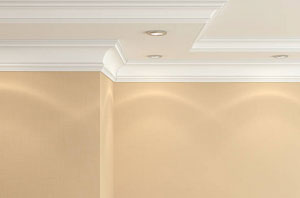
Coving involves much more than just improving the aesthetic value of a space since it also conceals imperfections in the way walls and ceilings are joined. In a vintage property, coving could provide a neat and decorative way to ensure a more sophisticated look of the home while creating a clean finish. It does not matter if one is working on a renovation of an old property or a contemporary dwelling in Hale Barns because a well-placed coving adds sophistication & style to any space.
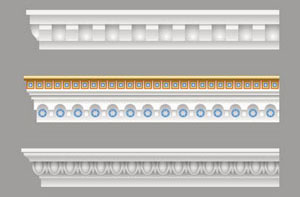
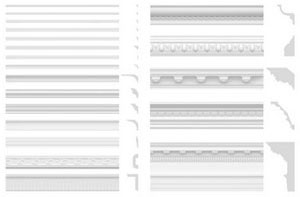
All these materials and a jaw-dropping variety of shapes and designs too, like cavetto, ovolo, cyma recta, ogee, egg and dart, step, Victorian, Edwardian, art deco, and dentil.
Coving can provide the perfect finishing touch to a room's interior design, bringing a subtle yet striking effect. The shape of coving can help to create a seamless transition between ceilings and walls, giving your home a more refined appearance. With so many coving styles & materials to choose from, finding the right one for your property can be a challenging endeavour. To make the best coving choice for your home, it is important to consider both your individual preferences & the property's style. The installation process for coving should be completed to the highest possible standard to achieve the best results.
If this all sounds a bit complicated to you, there's help at hand. It will be most helpful to get some advice & guidance from a specialist Hale Barns coving fitter, which should put everything in perspective. It is always better to get a bit of professional help when you want to achieve a quality coved finish on your Hale Barns property.
Your Hale Barns coving installation specialist should be just as capable of doing the restoration and repair of coving, as they are with new projects. Repairs to coving & decorative mouldings isn't something that should be needed all that often, but might need to be done from time to time. For example, you could need the restoration of coving, ceiling roses, dado rails, cornices, picture rails, panel mouldings, fire surrounds, corbels, dado corners, or wall plaques.
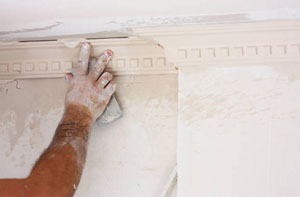
Though coving work is regularly done by specialist coving fitters in Hale Barns, it's more often carried out by plasterers or joiners (in the case of wooden mouldings). Whichever it's that you choose to hire, it's invariably sensible to check that they're proficient at this type of work and that they're confident in what they are doing. It's painstaking work to fit coving properly & so as to get a high quality finish it must be done carefully and meticulously.
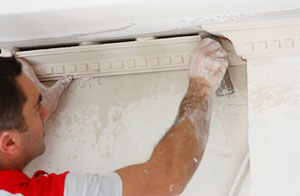
Cleaning the walls & ceilings is one important step before coving can be finished. More specifically, the wall should be dry, clean, and as level as possible for greater adhesive property. Skilled coving installers from the Hale Barns area will perform precise checks of the room, including measurements, drawings the lines, and cutting mitres in the corners. Following the preparations will allow getting seamless binding that does not need filling while painting.
When obtaining & sorting through quotes, don't immediately go for the cheapest coving installer. As the saying goes "pay cheap, pay twice", so you want to avoid a shoddy standard of workmanship. Picking the right person for the job means you can expect the final effect of your coving to be outstanding.
In an effort to track down a coving fitter or plasterer in Hale Barns you could take a look in local classified listings or newspapers, you can try a trade websites such as Trustatrader or Rated People, you can search on Instagram or Facebook, or you can check out the Federation of Master Builders (FMB) website & use their search facility for certified plasterers in Hale Barns. You'll be able to search for coving related products like strips of coving, coving adhesive, pre-cut coving corners, coving cutting tools, and ceiling roses by going to Jewson, B&Q, Wickes or Coving Direct, and you're able to purchase equipment and tools for plastering & coving (if you fancy tackling it yourself) by searching through the websites of Screwfix, Tool Station or Artex.
Professional Installation
The intricacy of the coving project, budgetary constraints and an individual's proficiency predominantly determine whether to choose DIY or professional installation.
- Expertise and Precision: Professional installers bring a wealth of skill and experience to the table. They're adept at handling different types of coving materials, including plaster, which is heavy & requires a skilled hand for installation. Professionals ensure precise measurements & cuts, especially important when coving needs to fit into awkward spaces or when it involves complex patterns.
- Time Efficiency: The involvement of a professional can considerably cut down the time needed to complete the project, thanks to their access to suitable tools & techniques that streamline the process, particularly for larger or more complicated installations.
- Quality Assurance: In most cases, professional installation is accompanied by a quality guarantee. Experts tend to deliver a flawless finish, ensuring the coving is securely fixed and perfectly aligned, which is crucial for both a refined appearance & the coving's durability.
- Safety: In coving installation, the necessity to handle heavy materials & work at height is commonplace. Professionals are trained to work safely in such conditions, thus lessening the risk of accidental mishaps.
- Cost Implications: The main disadvantage of professional coving installation lies in its expense. Often, it is notably costlier than undertaking the project yourself, particularly when using more expensive materials such as coving made from plaster.
Ultimately, it gives property owners in Hale Barns some peace of mind knowing that the coving they have had installed will both fit in with the design of their property in addition to last for a long time. Reading customer reviews, asking for examples of previous work & collecting a few quotes can all be beneficial steps to take before arriving at a decision about who to hire.

Coving installation can be undertaken in Hale Barns & also nearby in: Bowdon, Bowgreen, Styal, Manchester, Broadheath, Lacey Green, Dunham Massey, Little Bollington, Timperley, Altrincham, Davenport Green, Thorns Green, Hale, Warburton Green, Ringway, Ashley, and in these postcodes WA15 0AR, WA15 0HZ, WA15 8SN, WA15 0RR, WA15 0DD, WA15 0DQ, WA15 0SB, WA15 0EU, WA15 0JB, WA15 0RY. Locally based Hale Barns coving specialists will most likely have the telephone code 0161 & the postcode WA15. Verifying this will ensure that you access local coving fitters. Hale Barns property owners will be able to benefit from these and many other similar services.
Do-it-Yourself
It is on no account impossible for you to have a go at coving installation for yourself. There are plenty of online merchants offering coving products & you might even find what you need in a local Hale Barns DIY store. Coving is typically supplied in two or three metre lengths, and you can also get the corners ready cut for some designs, making life somewhat simpler.
It goes without saying that there is an abundance of info on the web offering tips on how to put up coving and cornices, together with useful tutorials and videos to help you on the right path. We recently noticed this illuminating post which might be helpful.
Polyurethane Coving Hale Barns
Both light and easy to put up, polyurethane coving is more robust than the cheaper polystyrene option & it looks far better when it's in position. You can save more time by using polyurethane coving, since it is normally ready primed & readily prepared for painting. Offered in a variety of shapes & sizes including plain, step, ogee step, rope, bead step, and astragal, polyurethane coving is water resistant, recyclable, easy to paint, durable, and versatile.
What's the Difference Between Coving & Cornice?
A source of continual bewilderment to property owners in Hale Barns, and a question that we are commonly asked is "What exactly is the difference between coving and cornice?" Essentially the reply is that they're one and the same. The principal distinction, if you want to draw one, is that cornices are really elaborate, while covings are comparatively simple in design. Initially, the term coving was used to describe a plain "C" shaped concave moulding that was prevalent in post-world war period in Hale Barns. In comparison, cornices sometimes call for skills of a specialist craftsman in Hale Barns, if they are to be successfully installed, because they're usually exceedingly intricate mouldings.
Plaster Cornice Refurbishment
The aesthetic appearance of a building's interior can be significantly improved by prioritising plaster cornice restoration. Damage to cornices, the ornamental molding located at the juncture of walls and ceilings, can occur due to various factors like moisture, general wear and tear or accidental impact.
Refurbishing a plaster cornice requires the expertise of a skilled tradesperson who can carefully assess the level of damage & devise a suitable restoration plan. The typical process for repairing a plaster cornice entails cleaning the area, eliminating damaged or loosened plaster, and filling in the gaps with new plaster. Replicating intricate patterns or designs is a skill possessed by tradespeople, ensuring that a repaired cornice matches the original design.
If a damaged cornice is left unrepaired, it can worsen & threaten the property's safety and structural integrity. Any attempt to refurbish a plaster cornice should involve professional assistance, making it important to seek their help. In listed buildings where maintaining original features is essential, a well-maintained cornice can enhance the building's visual appearance while preserving its historical integrity.
Repair & Maintenance
Repairing & maintaining coving and cornices is an essential aspect of keeping a home in good condition. Over time, the beauty of cornices & coving, which can add a touch of style to a room, can diminish due to cracks, damage or discolouration.
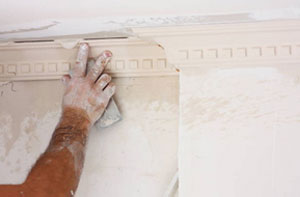
To avoid additional damage, frequent inspections must be conducted to promptly identify any problems & make necessary repairs. The extent of the damage will determine the kind of repair needed for cornices & coving, ranging from basic filling & smoothing to the complete replacement of sections. The use of proper materials & techniques when repairing coving and cornices is necessary to achieve a flawless finish that matches the original pattern.
Neglecting the upkeep of cornices & coving can cause structural damage that might compromise the integrity of the building. With proper repairs & maintenance, cornices & coving can retain their beauty and add value to a property for years to come.
What Tradesman Puts up Coving?
The various types of tradespeople in the Hale Barns area who are involved with the installation of coving are determined partly by the material that is used & how complicated the job is. Specialist coving installers are the best people for the job as they're trained & have the equipment necessary to install the coving properly. Nevertheless many plasterers do save some time on the installation of plaster coving and decorative cornices and appreciate how to install this type of material. Wood coving installation may need the assistance of a skilled carpenter or joiner while experienced painters and decorators can also install light coving. In any case, regardless of the kind of specialist you choose, ensure that you look for someone who has experience and seen their previously completed projects in terms of coving.
Wooden Coving Hale Barns
Wooden coving, positioned where the ceiling meets a wall, serves as a decorative feature that imparts elegance to any room. Available in a range of finishes & styles, from classic to contemporary, it caters to diverse tastes & interior design preferences. Not only does coving add to the visual appeal of your home, but it also hides any ugly joints or imperfections where the wall meets the ceiling.
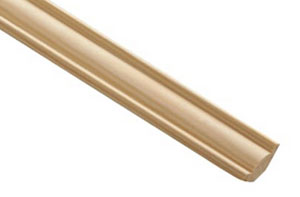
Ensuring a professional and seamless finish with wood coving installation demands skill and precision. The process involves carefully measuring the area, cutting the coving to the appropriate size, and fixing it firmly in position with nails & adhesive. Careful sanding and staining or painting may also be necessary to complement the coving to your current decorative scheme. Some DIYers might choose to do this job themselves, but hiring professionals for installation ensures a flawless and consistent finish.
By using a professional installation service, you can take most of the hassle out of fitting wooden coving. With the necessary tools & knowledge, skilled installers ensure the job is completed successfully & a high standard. From the initial consultation and measurements to the final details, they deal with everything, ensuring your home is enhanced with perfectly executed coving. Save your time & secure a pleasing and enduring outcome by investing in professional coving installation. (Wooden Coving Hale Barns).
Gyproc Coving Hale Barns
Gyproc coving, a decorative feature, is used to improve the appearance of the junction between walls and ceilings in Hale Barns. Made from plasterboard, it comes in a variety of styles & sizes to suit different types of rooms. Creating a smooth transition from ceiling to wall and hiding unattractive imperfections or gaps, installing Gyproc coving adds a bit of elegance to any space.
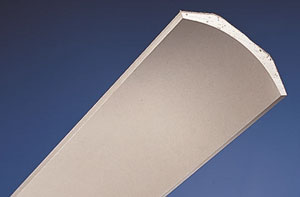
The procedure for installation is not that difficult. Cut to fit the room's dimensions, the coving pieces are then fixed in place with a strong adhesive. To achieve a neat finish, joints and gaps are filled and sanded smooth. Home and property owners in Hale Barns wanting to improve their interiors' appearance without major refurbishments will find Gyproc coving an attainable DIY project.
Gyproc coving also comes with several practical benefits. It can cover cracks that may appear in the long run at the wall-ceiling junction, providing a longer-lasting, cleaner look. To allow for further customisation, coving can be painted to either match or contrast with the decorative features of the room. To enhance the functionality and beauty of a room, Gyproc coving is an effective and simple option. (Gyproc Coving Hale Barns)
Picture Rails
Attached to walls, picture rails are horizontal mouldings that are customarily installed around 12 to 24 inches beneath the ceiling line. Their original function was for suspending pictures without harming the walls with screws, nails, or hooks. Instead of making holes in the wall through drilling, picture hooks that sit neatly on the rail enable you to easily change or move your artwork or photos whenever you choose.
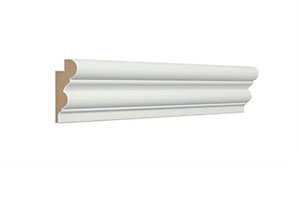
In Edwardian & Victorian homes, these rails became quite popular, providing both a decorative touch & functionality to rooms. They can be found in older properties, but a considerable number of people in Hale Barns still install them today for their timeless look and practical use. Picture rails also contribute to a visual break on tall, featureless walls, adding character to the space.
With fundamental carpentry skills, installing a picture rail can be considered a simple task for do-it-yourself enthusiasts. It requires measuring the length, cutting the picture rail accordingly, and fastening it to the wall, usually employing screws or nails. After being put in place, the rail allows for painting or staining to match your existing decor, making it both a stylish & useful addition to any room. Hale Barns householders who lack the ability or desire to install picture rails should seek the assistance of a local coving installer. (Picture Rail Installation Hale Barns)
Coving Related Tasks

Hale Barns coving specialists can normally help with restoration of original plaster cornices & ornate features, cornicing, the cutting of coving, ornate panel mouldings, decorative fire surrounds, traditional coving Hale Barns, plaster coving installation for traditional and period properties, coving refurbishment, decorative cornice installation for high ceiling interiors, lightweight coving Hale Barns, duropolymer coving, the removal of coving, ceiling rose installation in Hale Barns, the installation of cornices, bedroom coving installation, softwood coving, bespoke coving installation to suit individual room designs, ornamental wall plaques, wooden cornices, matching new coving to existing period mouldings, plaster cornice repairs, Victorian coving Hale Barns, lounge coving, cheap coving installation and other coving related work in Hale Barns, Greater Manchester. Listed are just some of the duties that are conducted by local coving fitters. Hale Barns specialists will keep you informed about their full range of coving services.
 FAQ: Here are a selection of the most frequently asked questions about coving & coving installation: Should I repair or replace damaged coving? What materials are dado rails made from? Which coving material lasts the longest? How much does cornice installation cost? What is the best coving for high ceilings? What is the difference between coving & cornice? Does coving make a room look bigger? Can decorators install coving? Can coving be fitted to uneven walls? Can I install coving myself?.
 Coving Installation Hale Barns
 Coving Installers Near Me
 Coving Fitters Hale Barns
Coving Installers Near Hale Barns
Also find: Dunham Massey coving installers, Manchester coving installers, Altrincham coving installers, Timperley coving installers, Bowgreen coving installers, Ashley coving installers, Styal coving installers, Bowdon coving installers, Thorns Green coving installers, Ringway coving installers, Davenport Green coving installers, Warburton Green coving installers, Hale coving installers, Little Bollington coving installers, Broadheath coving installers, Lacey Green coving installers coving fitters and more near Hale Barns, Greater Manchester. All of these towns & villages are catered for by local coving fitters. Hale Barns residents can get quotations by going here.
More: Coving Services, Period Cornices, Coving Repairs, Coving Supply, Gyproc Coving, Coving Cutting, Coving Replacement, Cheap Coving, Traditional Coving, Decorative Mouldings, Feature Cornices, Custom Coving, Coving Fitters, Lightweight Coving, Cornice Replacement, Cornices and Coving, Decorative Coving, Moulding Repairs, Cornice Replacement, Feature Cornices.
Coving fitters WA15 area, telephone code 0161.
TOP - Coving Installation Hale Barns
Coving Fitters Hale Barns, Coving Specialists Hale Barns, Coving Removal, Ceiling Rose Installation, Cornices, Cheap Coving, Coving Installers Hale Barns, Dado Rails and Mouldings, Covings and Cornices, Coving Installation Hale Barns, Coving Fitters Near Me, Cornice Installation
